
Meeting Times:
First and third Tuesdays of every month at 6:30 pm, Town Hall, 151 S Banner Street, Elizabeth, CO 80107
Visitors are allowed up to three minutes of public comment during the unscheduled Public Comment portion of a regularly scheduled meeting. Visitors are allowed up to three minutes of public comment during the public comment portion of a Public Hearing at a regularly scheduled meeting.
The Town of Elizabeth’s Planning Commission serves as a legally mandated group who acts in an advisory capacity for the Town’s Board of Trustees. The Planning commission addresses issues directly related to planning and zoning, land use regulation, building and housing codes, and community development. Their role is limited to land use within the Town of Elizabeth, and do not work in attracting business to the community or in long-term planning and development of the Town as a municipality or as an organization.
PLANNING COMMISSION
- George Fick, Chair (Term ends 12/31/2026)
- Amy Schmidt, Vice-Chair (Term ends 12/31/2029)
- Jim Santangelo, Planning Commissioner (Term ends 12/31/2029)
- Paula Ray, Planning Commissioner (Term ends 12/31/2029)
- Samantha Barnhart, Planning Commissioner (Term ends 12/31/2029)
- Jennifer Malley, Planning Commissioner (Term ends 12/31/2029)
- Debbie Kula, Planning Commissioner (Term ends 12/31/2026)
Per Town Ordinance 26-03, the Planning Commission shall consist of seven members who will serve a four-year term. The Planning Commission is appointed by the Board of Trustees. Persons eligible for appointment on the Planning Commission must live within the Town limits. Applications are accepted for the Planning Commission when there are vacancies. For more information, please contact the Community Development Department 303-646-4166 x4.
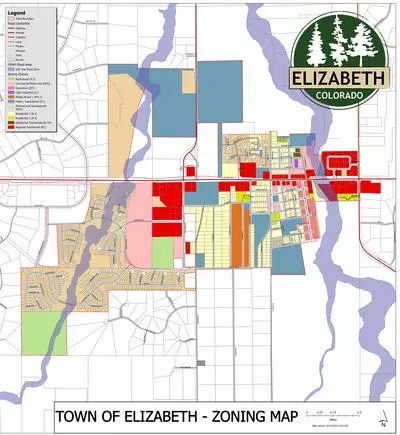
On July 16, 2024, the Planning Commission held a workshop to review the town's zoning districts. Town staff presented purpose statements and dimensional standards for all 14 zoning districts outlined in Chapter 16, Article I of the Elizabeth Municipal Code, as well as for the five Planned Unit Developments (PUDs) within Town. Commissioners examined the zoning map, discussing areas where zoning districts are present or absent within the town. This session served as a refresher for planning commissioners on the current zoning landscape, aiming to enhance their understanding and decision-making processes.
Introduction to Strong Towns Principles: Planning Commission Workshop Summary
On August 20, 2024, our Planning Commission participated in a workshop introducing the principles of Strong Towns, an approach to community development that emphasizes financial resilience and sustainable growth. We're excited to share some key takeaways from this enlightening session.
What is Strong Towns?
Strong Towns is a movement that advocates for a new approach to development, focusing on:
- Financial solvency for municipalities
- Productive use of land and resources
- Building resilient, adaptable communities
Key Takeaways from the Workshop
- Financial Sustainability: Like businesses, towns must "run a profit" to effectively serve the community. This means ensuring that our investments generate more value than they cost over time.
- Return on Investment: Infrastructure projects should be evaluated based on their long-term financial impact. A general rule of thumb is that $1 million in public improvements should generate $30 million in private investment.
- The Growth Ponzi Scheme: Large development projects can create an illusion of solvency but often don't cover the long-term maintenance costs of additional infrastructure.
- Pre vs. Post-WWII Development: Traditional pre-WWII development patterns tend to be more productive and adaptable compared to post-war suburban expansion.
- Complex vs. Complicated Systems: Traditional towns are complex, adaptable systems (like rainforests), while suburban developments are often complicated, less flexible systems (like monocrops).
- Incrementalism and Small Bets: Strong Towns emphasizes the importance of incremental development and making "small bets" on projects. This approach allows for:
- Testing ideas before large-scale implementation
- Adapting to changing needs and conditions
- Reducing financial risk
- Encouraging local innovation and investment
Next Steps
Our Planning Commission will continue exploring these concepts in future workshops. We encourage all residents to learn more about Strong Towns principles and how they might apply to our community.
Resources
For those interested in diving deeper into Strong Towns concepts, we recommend:
- Strong Towns Main Page
- Strong Towns Academy (free login required)
Get Involved
We value community input in this process. If you have thoughts or questions about how Strong Towns principles might apply to our town, please contact the Community Development Department.
Stay tuned for updates as we continue to explore these important concepts for our town's future!